
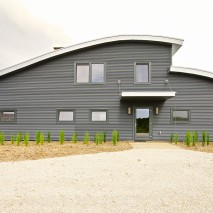
LEED, which stands for Leadership in Energy and Environmental Design, is a rating system developed by the U.S Green Building Council that is used as a tool to create environmentally responsible buildings and neighborhoods . It is a comprehensive set of guidelines encompassing every facet of a building’s development from site selection through post-occupancy care and management.
“Ithaca” is a home designed and built in northern Wisconsin, which is expected to be certified at the highest possible level of LEED rating.
This is history of how a LEED-for-Home project was created.
During January and February of 2012 2 meetings were held with architect, the owners, the entire building crew, and the LEED for Homes rater (who would be inspecting and testing the home) to explain what LEED is, and why it is important to adhere to specifications and drawings for this home, as it is unusual by typical construction standards. It is nearly 80% more energy-efficient than typical homes, the site is handled with more care, and materials and methods were used that are not found in typical homes.
A key element of LEED is education. Prior to construction copies of the following information sheet were provided at the entrance to the driveway leading to the home. Additionally, a banner sign was posted, indicating that this was a LEED-Registered project. Both of these measures were taken to inform the public of the unique project going up and to educate them about the process. As the homed neared completion, the local newspaper provided an in-depth expose of the home, its systems, and process undertaken by the crew. At the end of construction the homeowners and their caretakers were provided with a 2-hour walk-through of the home by all trades involved, to explain the various systems and educate the homeowners on the care and operations of the systems, the materials, and the landscape. This timeline will serve as an on-going educational opportunity to it readers of the LEED-for-Home process, and how this home satisfied the requirements.
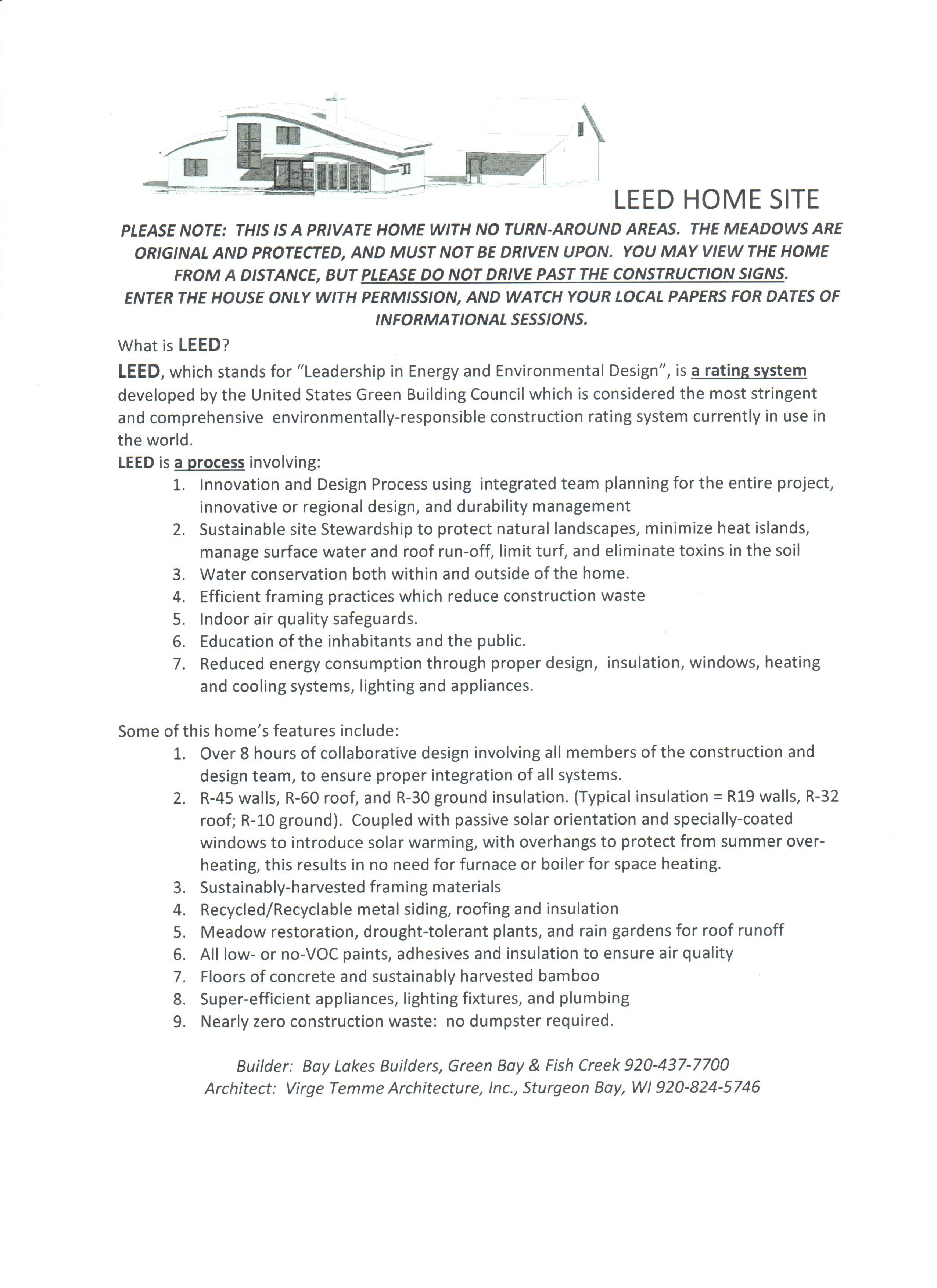
LEED HOME SITE
PLEASE NOTE: THIS IS A PRIVATE HOME WITH NO TURN-AROUND AREAS. THE MEADOWS ARE ORIGINAL AND PROTECTED, AND MUST NOT BE DRIVEN UPON. YOU MAY VIEW THE HOME FROM A DISTANCE, BUT PLEASE DO NOT DRIVE PAST THE CONSTRUCTION SIGNS.
ENTER THE HOUSE ONLY WITH PERMISSION, AND WATCH YOUR LOCAL PAPERS FOR DATES OF INFORMATIONAL SESSIONS.
What is LEED?
LEED, which stands for “Leadership in Energy and Environmental Design”, is a rating system developed by the United States Green Building Council which is considered the most stringent and comprehensive environmentally-responsible construction rating system currently in use in the world.
LEED is a process involving:
- Innovation and Design Process using integrated team planning for the entire project, innovative or regional design, and durability management
- Sustainable site Stewardship to protect natural landscapes, minimize heat islands, manage surface water and roof run-off, limit turf, and eliminate toxins in the soil
- Water conservation both within and outside of the home.
- Efficient framing practices which reduce construction waste
- Indoor air quality safeguards.
- Education of the inhabitants and the public.
- Reduced energy consumption through proper design, insulation, windows, heating and cooling systems, lighting and appliances.
Some of this home’s features include:
- Over 8 hours of collaborative design involving all members of the construction and design team, to ensure proper integration of all systems.
- R-45 walls, R-60 roof, and R-30 ground insulation. (Typical insulation = R19 walls, R-32 roof; R-10 ground). Coupled with passive solar orientation and specially-coated windows to introduce solar warming, with overhangs to protect from summer over-heating, this results in no need for furnace or boiler for space heating.
- Sustainably-harvested framing materials
- Recycled/Recyclable metal siding, roofing and insulation
- Meadow restoration, drought-tolerant plants, and rain gardens for roof runoff
- All low- or no-VOC paints, adhesives and insulation to ensure air quality
- Floors of concrete and sustainably harvested bamboo
- Super-efficient appliances, lighting fixtures, and plumbing
- Nearly zero construction waste: no dumpster required.
Builder: Bay Lakes Builders, Green Bay & Fish Creek 920-437-7700
Architect: Virge Temme Architecture, Inc., Sturgeon Bay, WI 920-824-5746
The following are images showing many of the features of the home as it was under construction:
Feb 15, 2012: Construction Begins
Feb 15: Excavation began; meadow was roped off and machine operators instructed to stay within a 10′ perimeter staked around the house and garage footprint. Top soil stockpiled, to be used for final grading later.
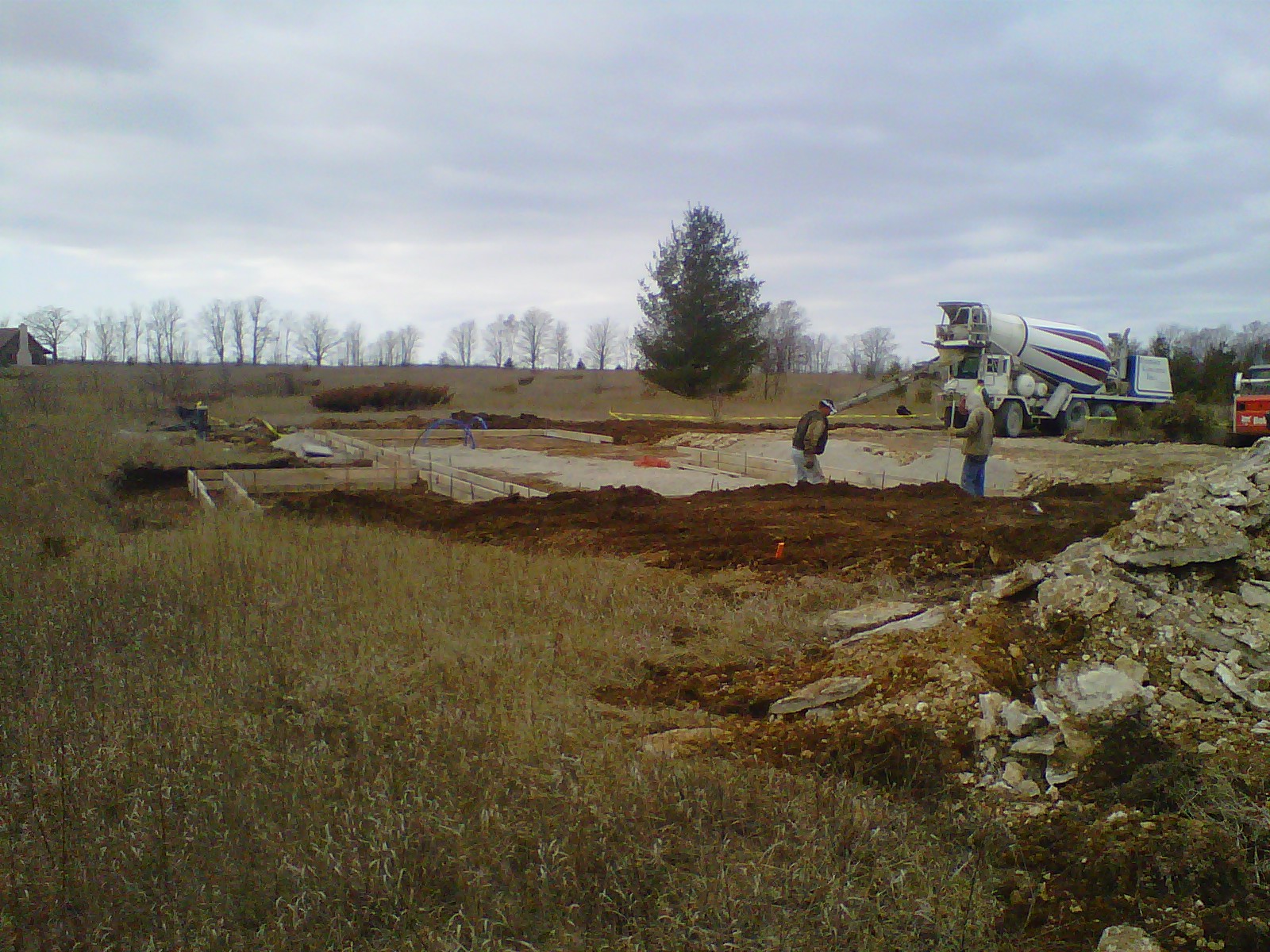
Feb 22, 2012: footings installed
Feb 21-22: Well dug at south side of house. Concrete footings installed: concrete trucks used chute to pour
concrete, to avoid driving over meadow.
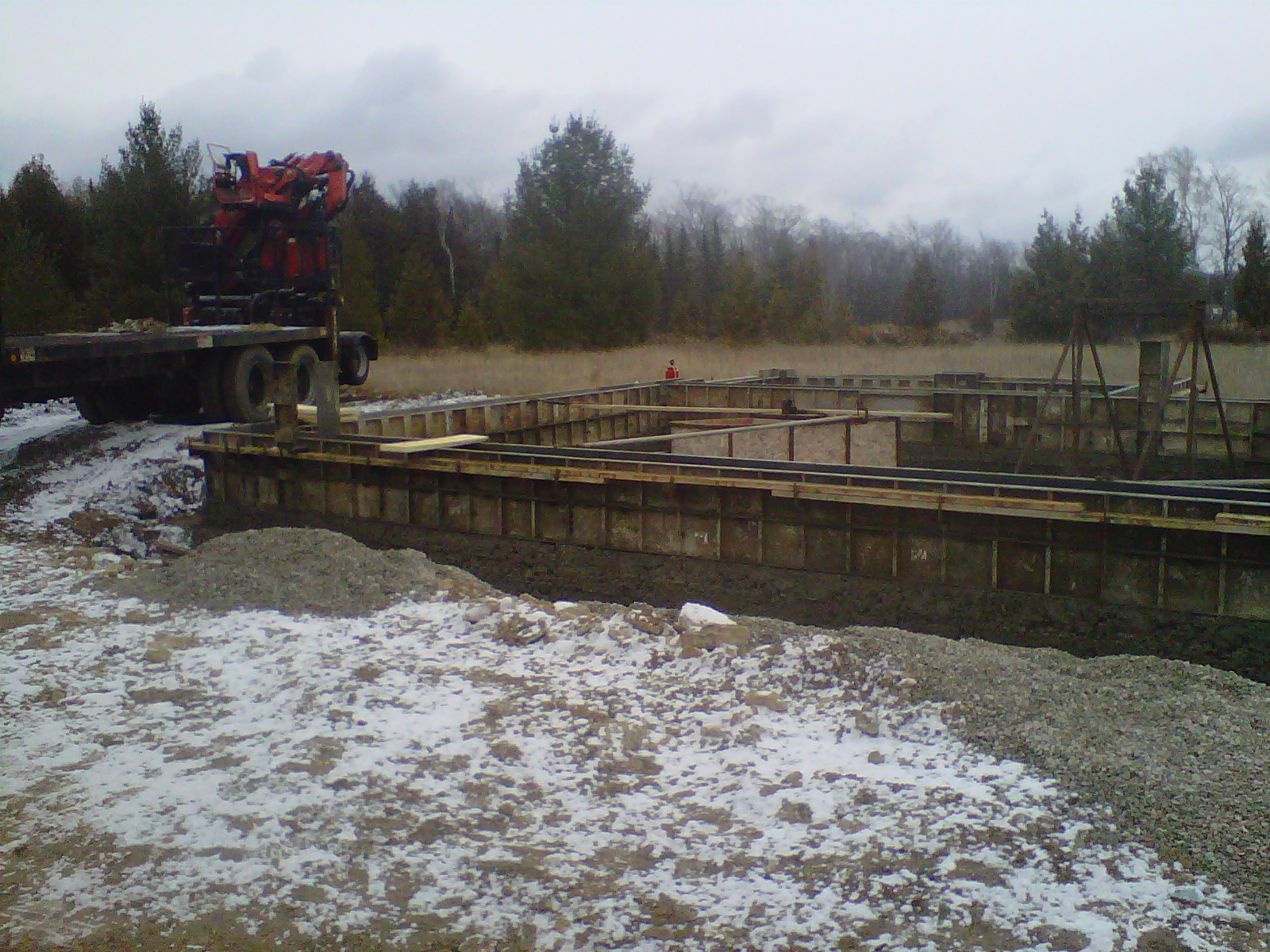
Feb 24 2012: foundation walls formed
Feb 24: snow; formed foundation walls.
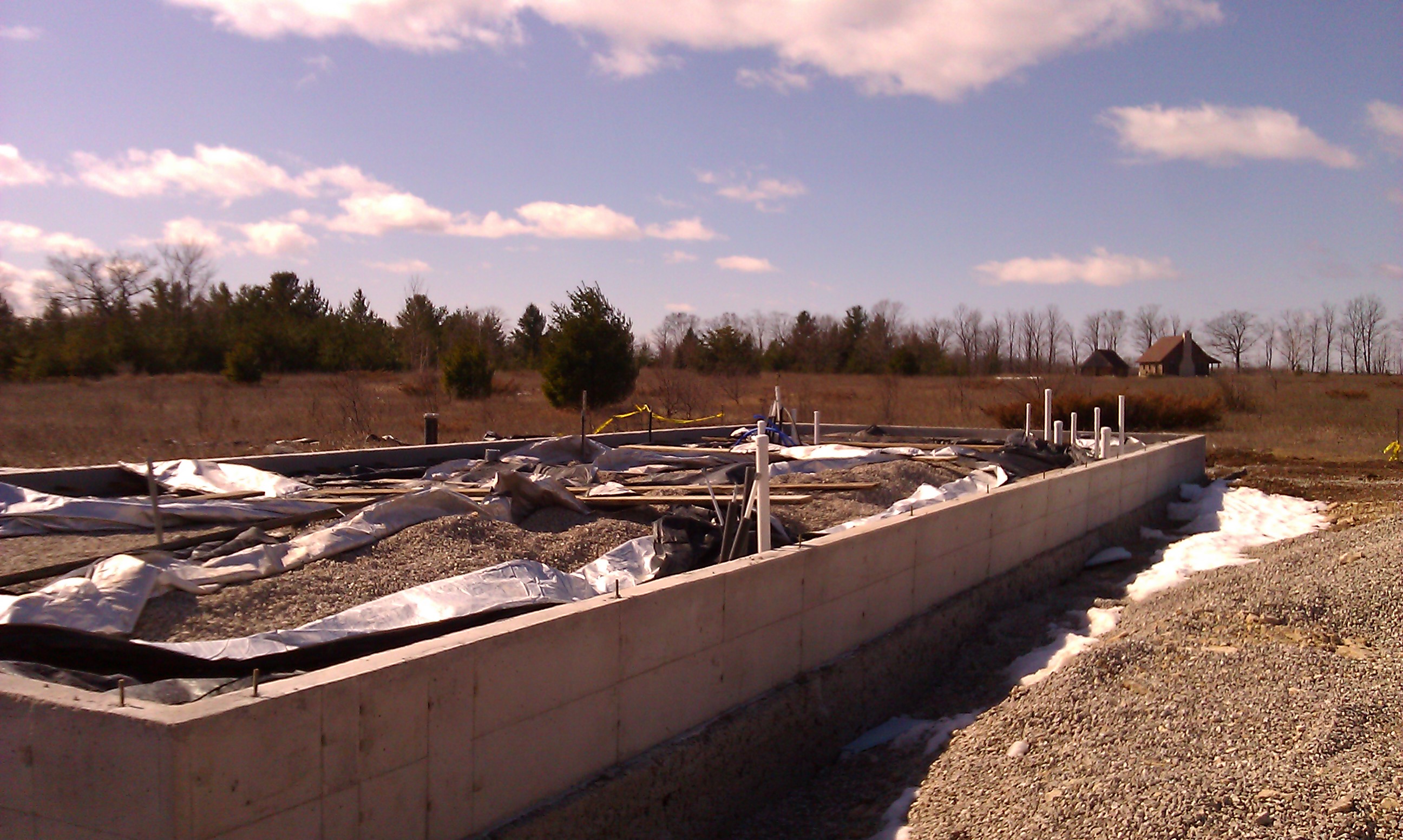
march 4: foundation complete
March 4: Foundation forms were stripped and below-slab plumbing and electrical runs installed. Gravel compacted & thermal tarp laid in place to protect from freezing rains.
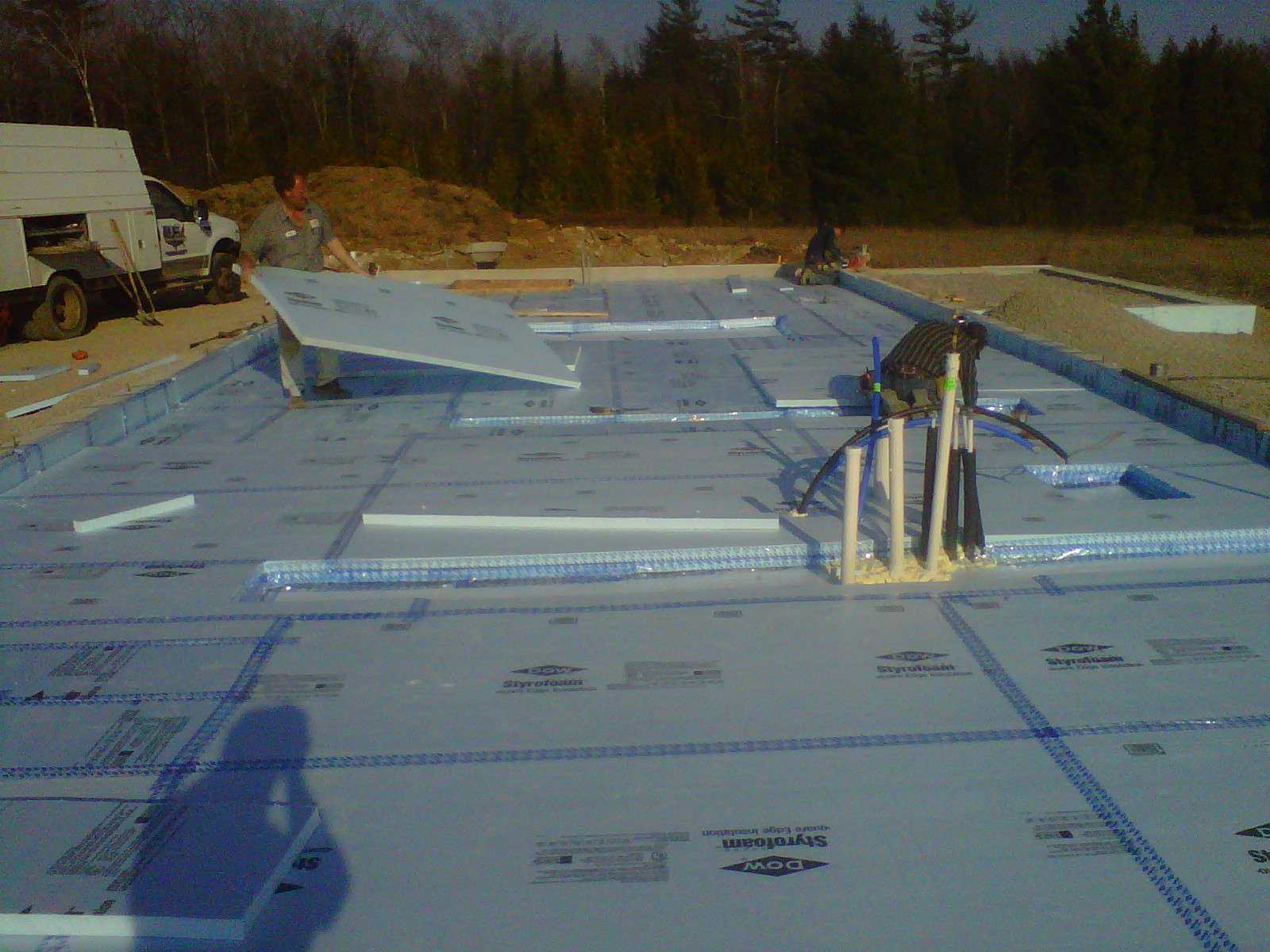 March 20-21: under-slab insulation installed. All joints staggered and sealed to prevent air movement between layers to insulation. All penetrations through insulation were foam sealed, to ensure against cold seepage and potential Radon gasses.
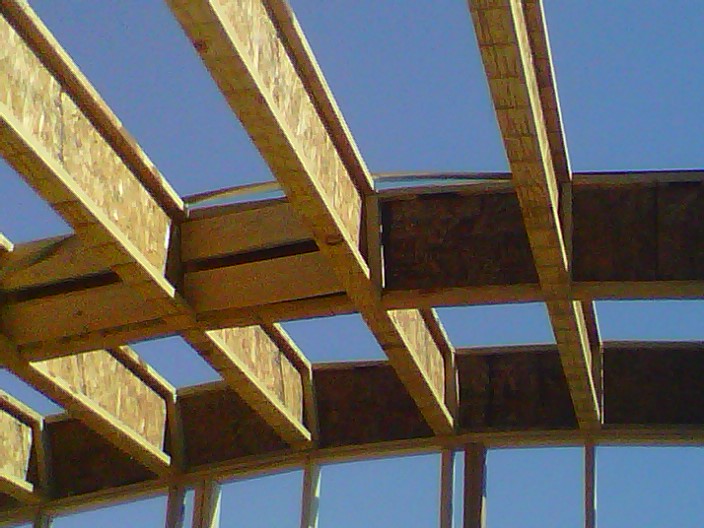 April 23: roof installed: used 16″ I-joists to reduce thermal transmission and to provide additional insulation depth. Placed I-joists directly over studs below and framed walls with studs at 24″ on cener to reduce redundant top plate, and reduce over-all framing materials.
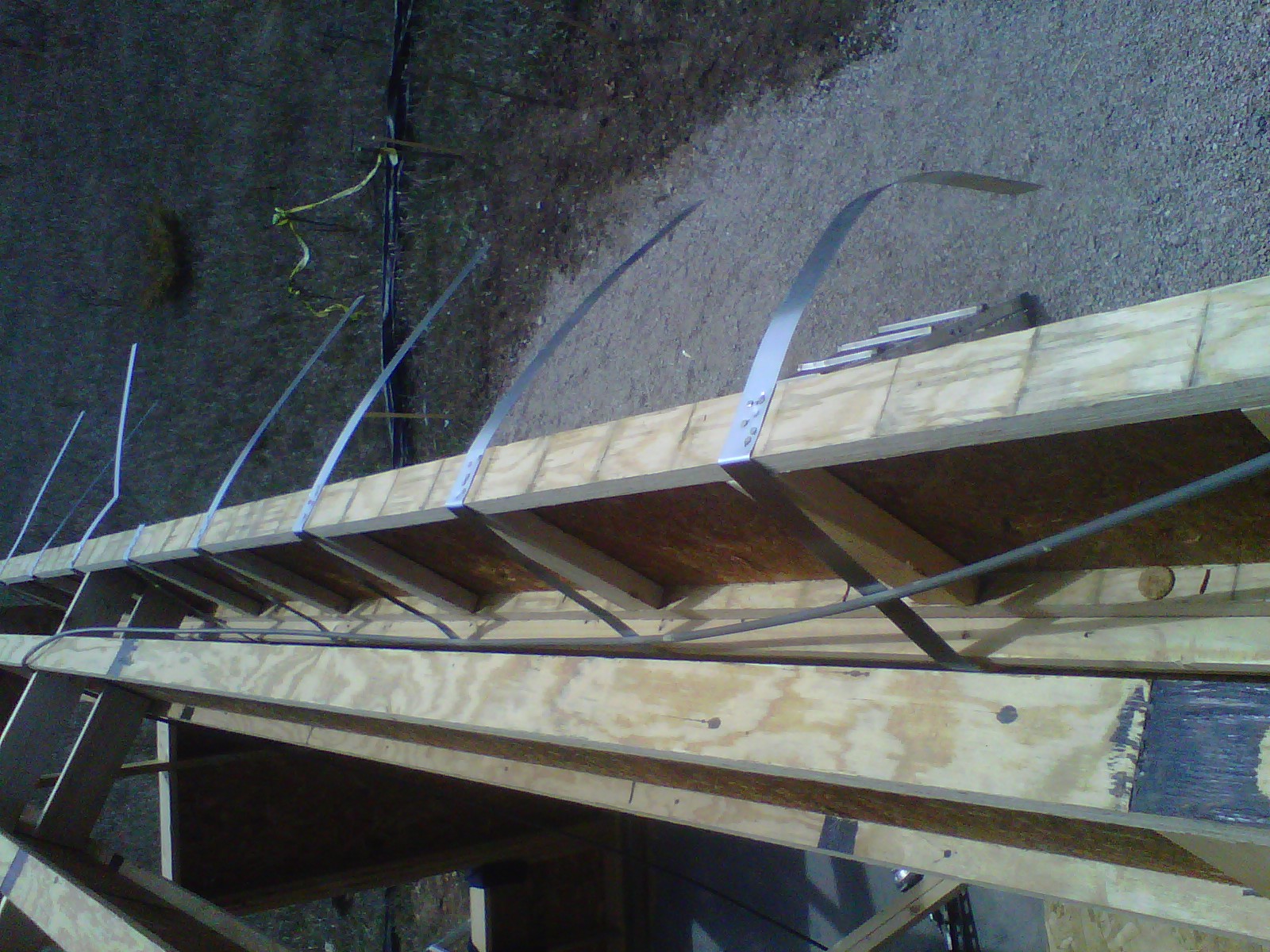 Screwed rafters to studs, and also strapped them to studs for additional protection from wind uploads
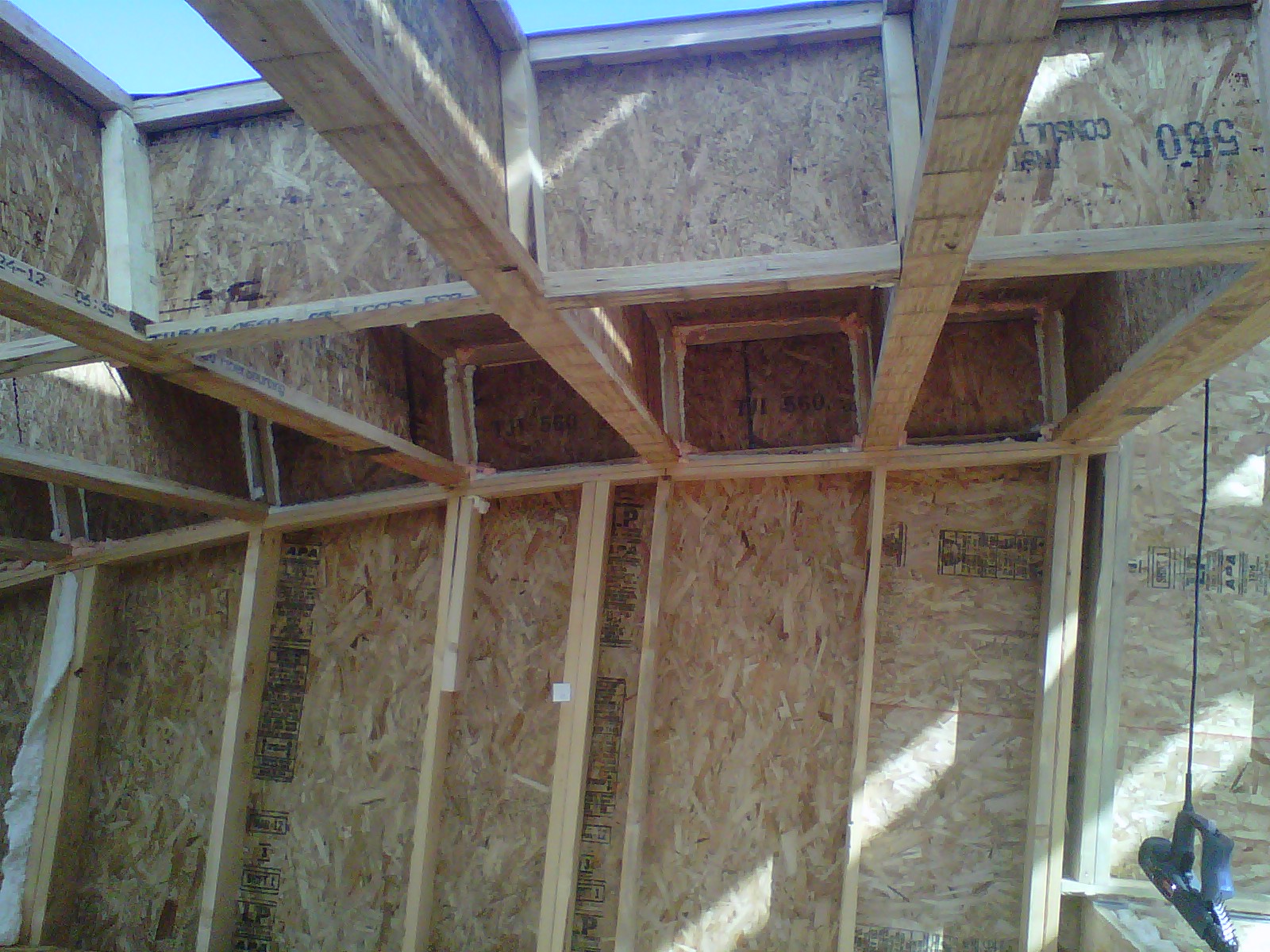 April 26 2012 foam-sealed all woof & wall intersections
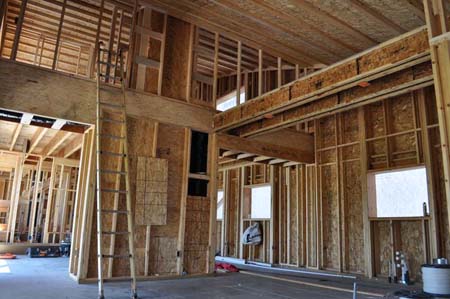 5/24/2012: 3/8″ OSB added to under side of rafters to provide continuous envelope at roof structure. Double 2-4 plates screwed below rafters provide electrical chase, so no roof penetrations are needed. Image also shows ladder framing (to reduce redundant materials at wall-to-wall connections), double-wall construction (to eliminate thermal bridging and provide space for additional insulation, and foam insulation at all wall & slab penetrations.
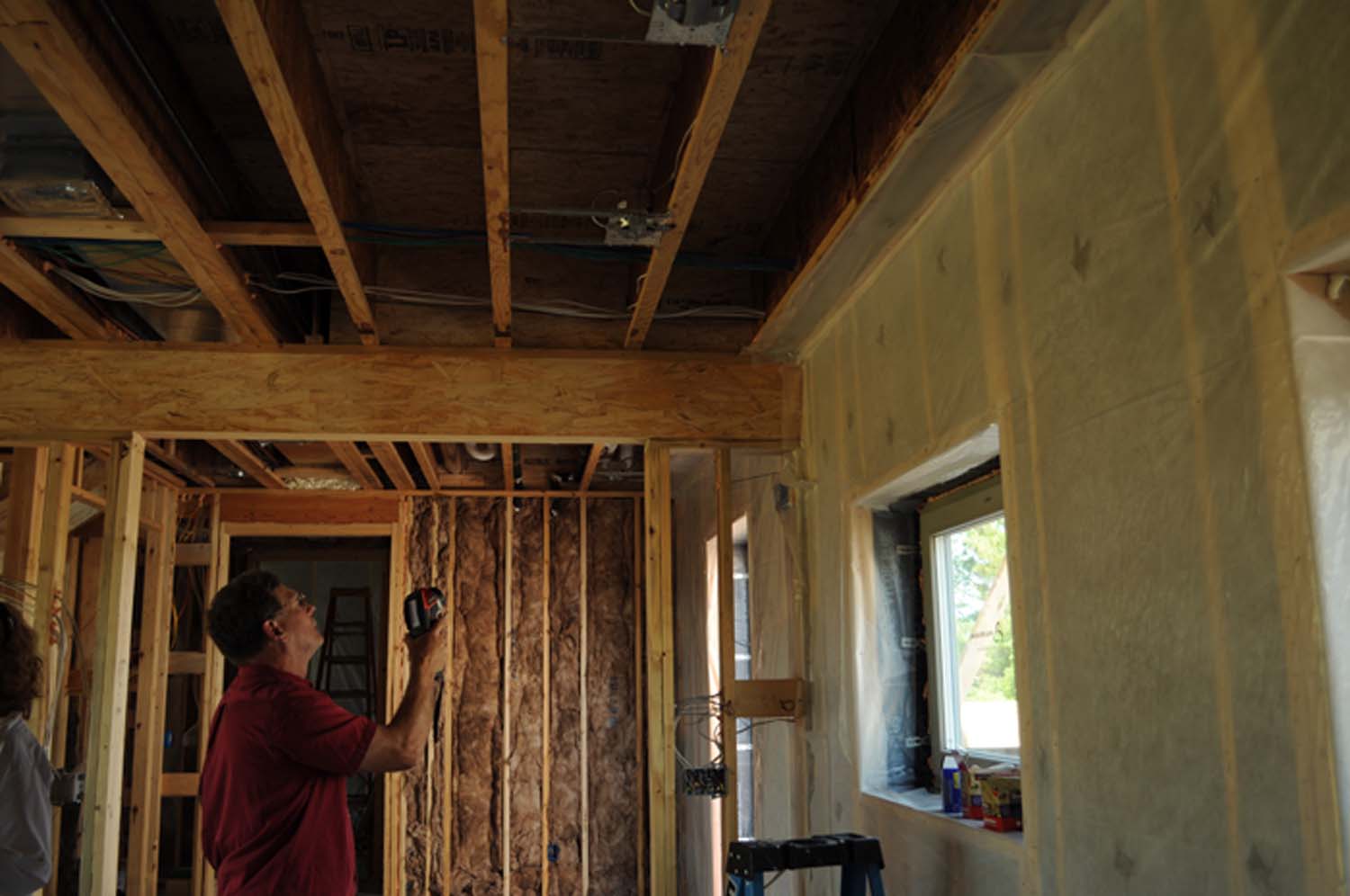
June 27: inspection of insulation prior to installation of drywall, to identify any possible voids which can then be filled before walls are sealed up.
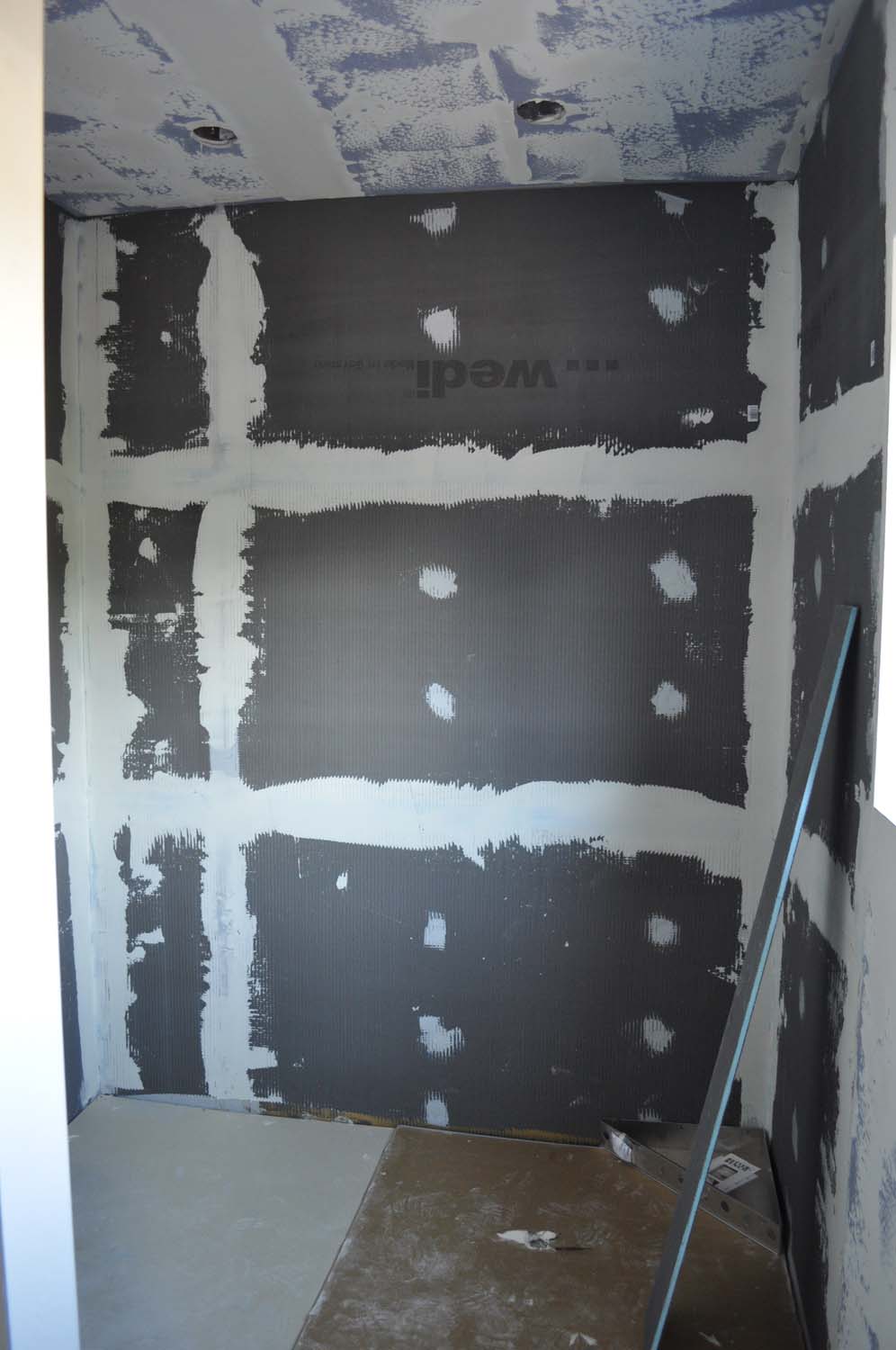
waterproof barrier used at shower walls; applied with low-VOC adhesives and sealant.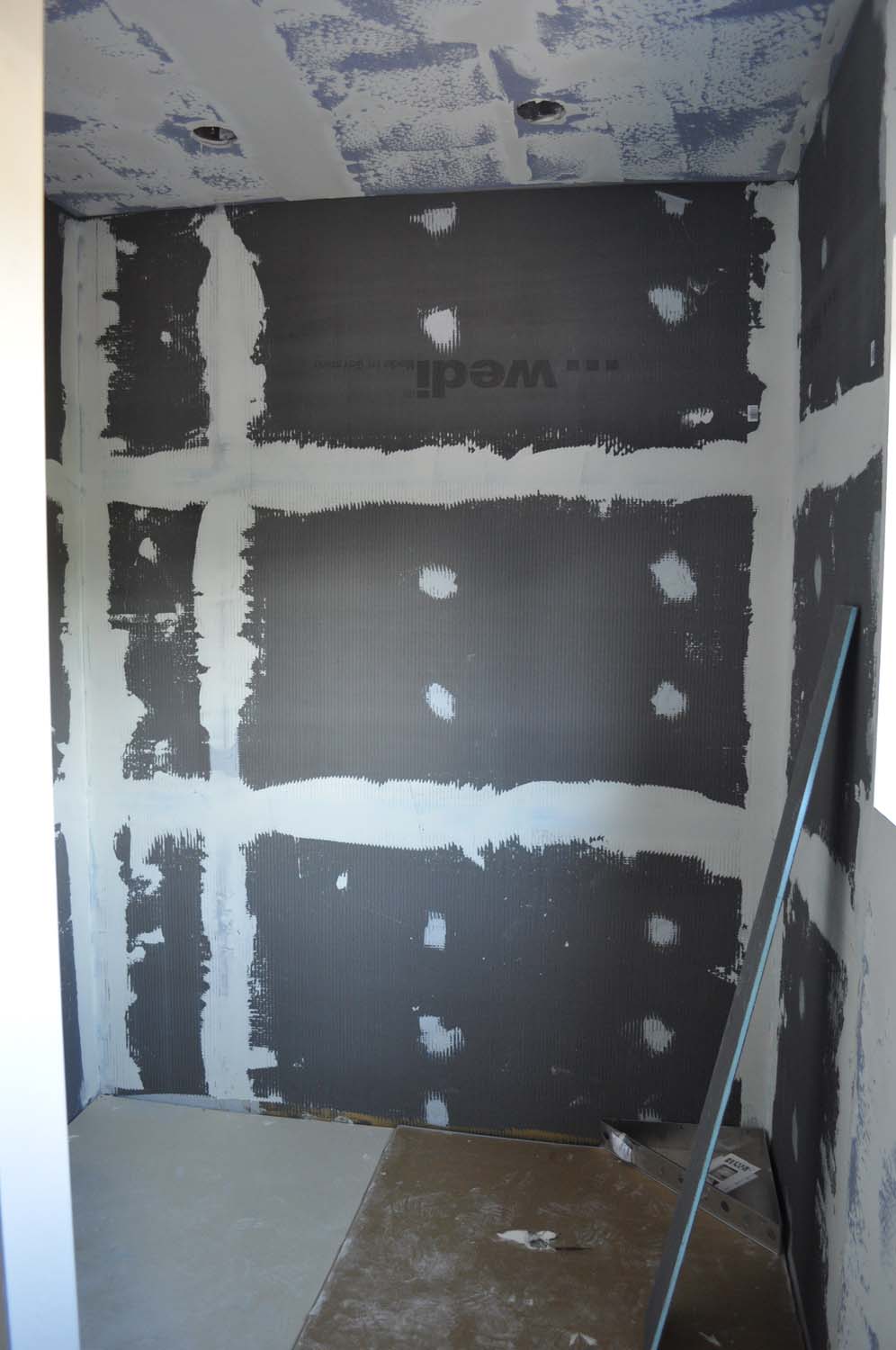
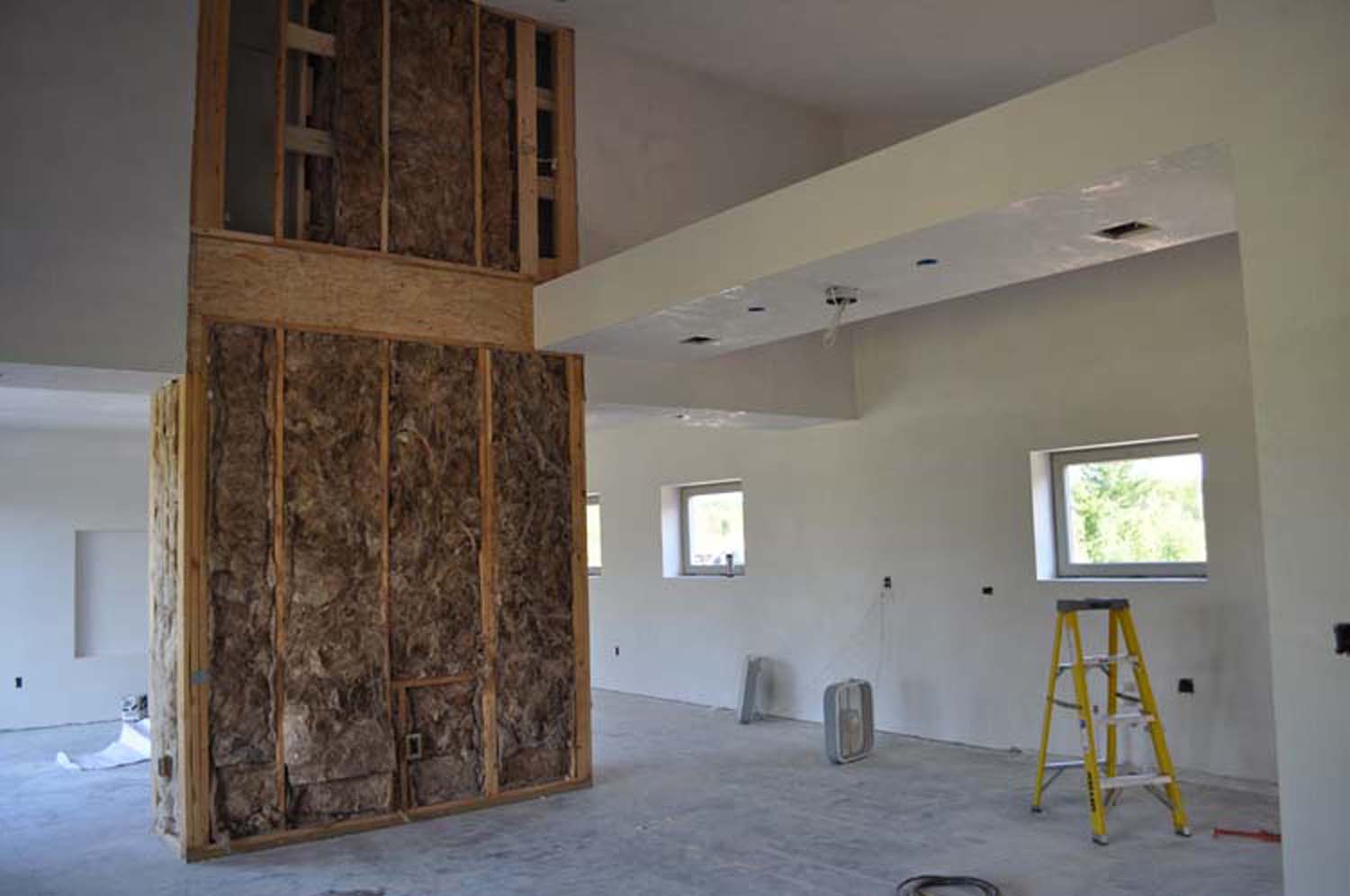 July 9 2012: fully-insulated fireplace chimney
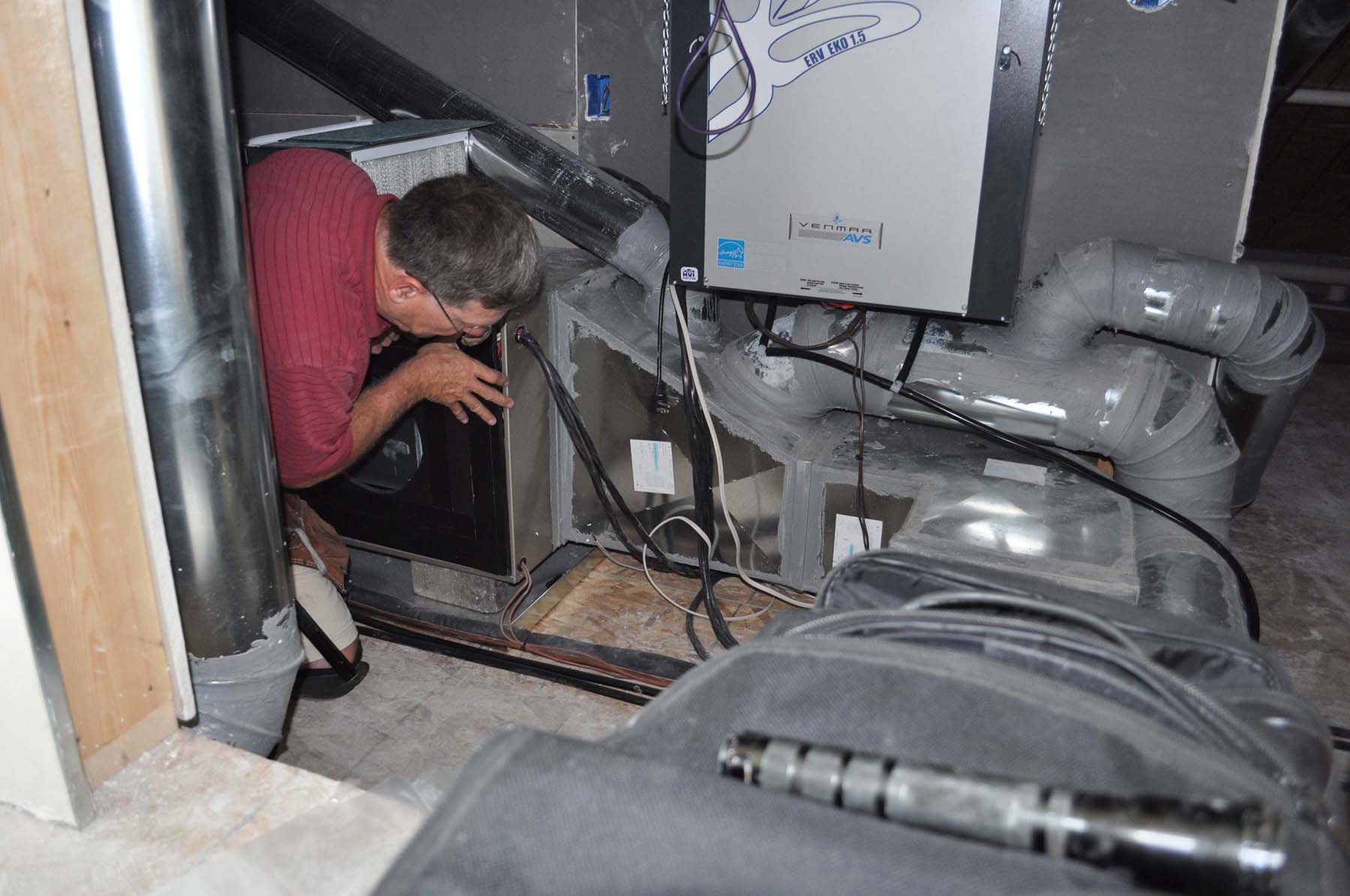 July 9 2012: duct leakage test - to make certain all duct connections are tight: improves HVAC system efficiency.
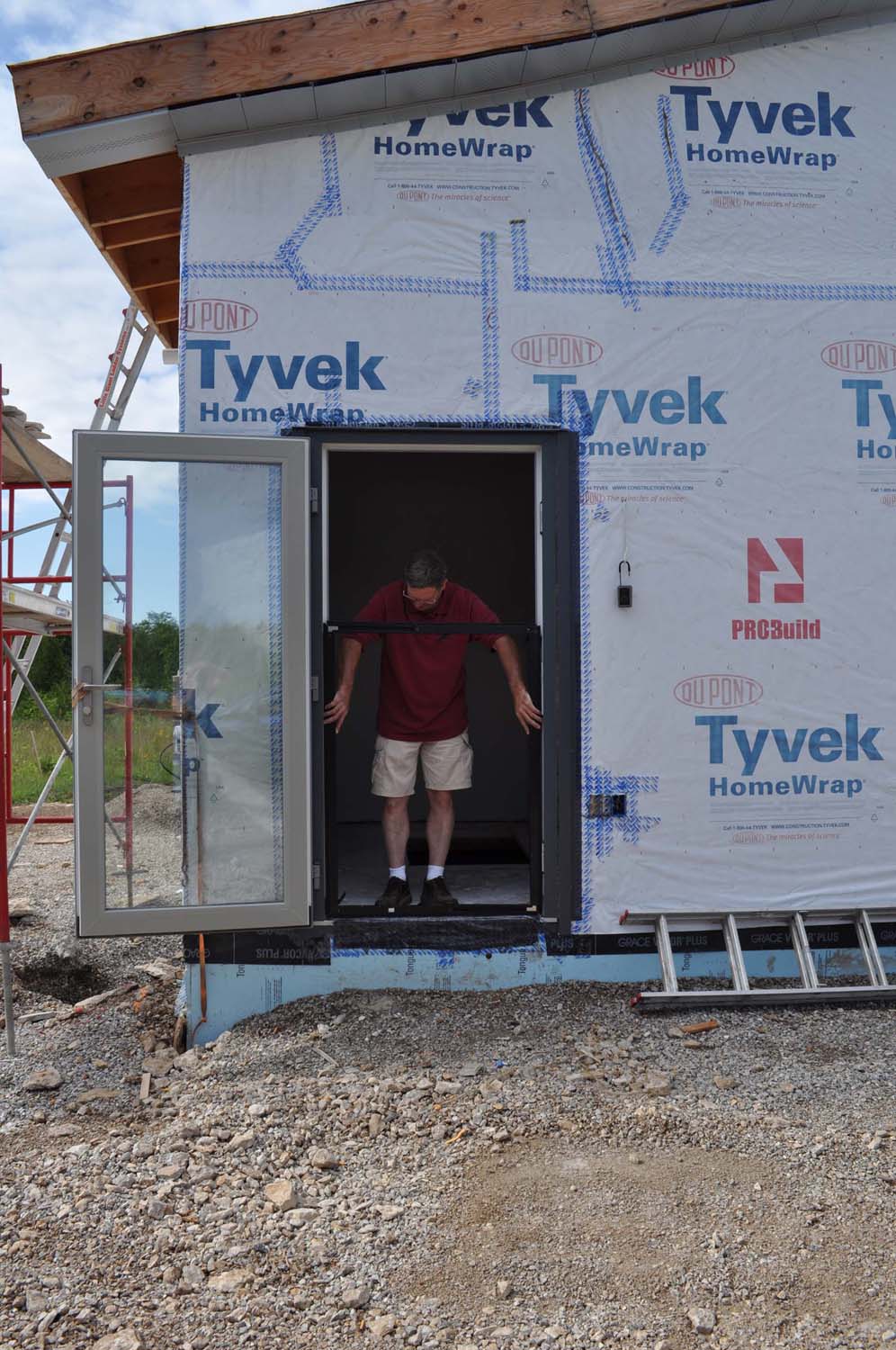 blower door test: identifies any air gaps in building envelope. Usually done at end of project; we elected to conduct a pre-finish test to identify any gaps or openings prior to completion, and then conducted another at end of completion. This allows for possible gaps to be corrected prior to finish painting & trim work.
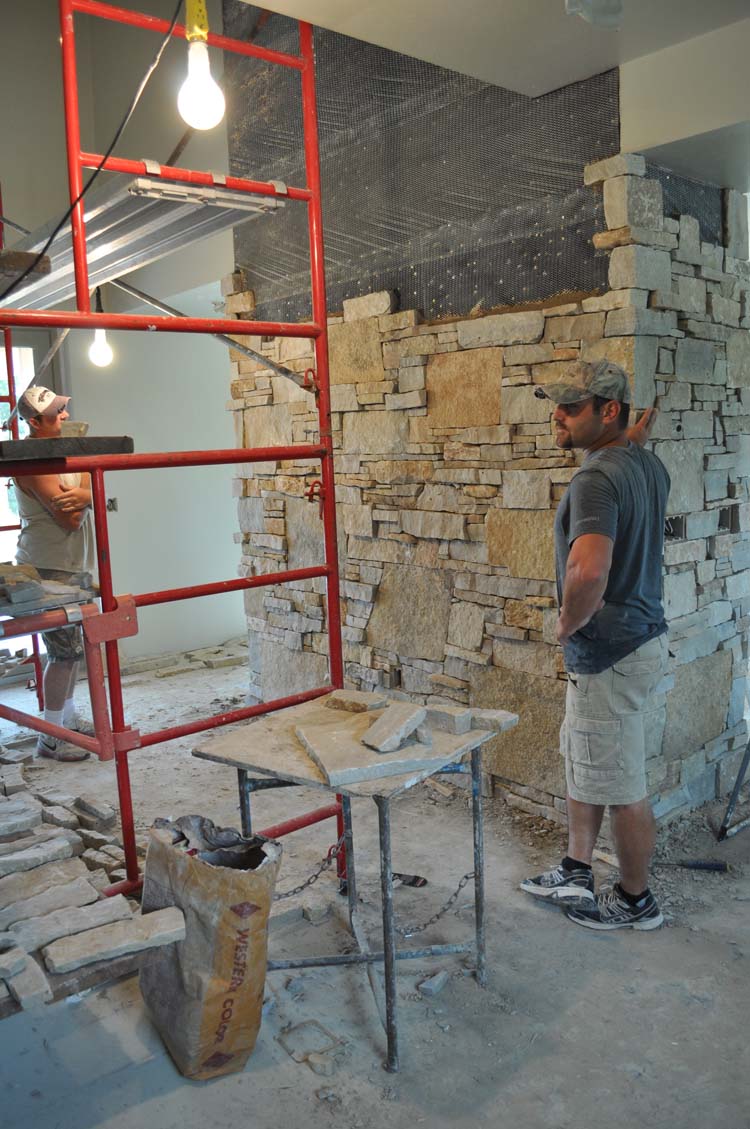 August 2012: installed locally-quarried stone.
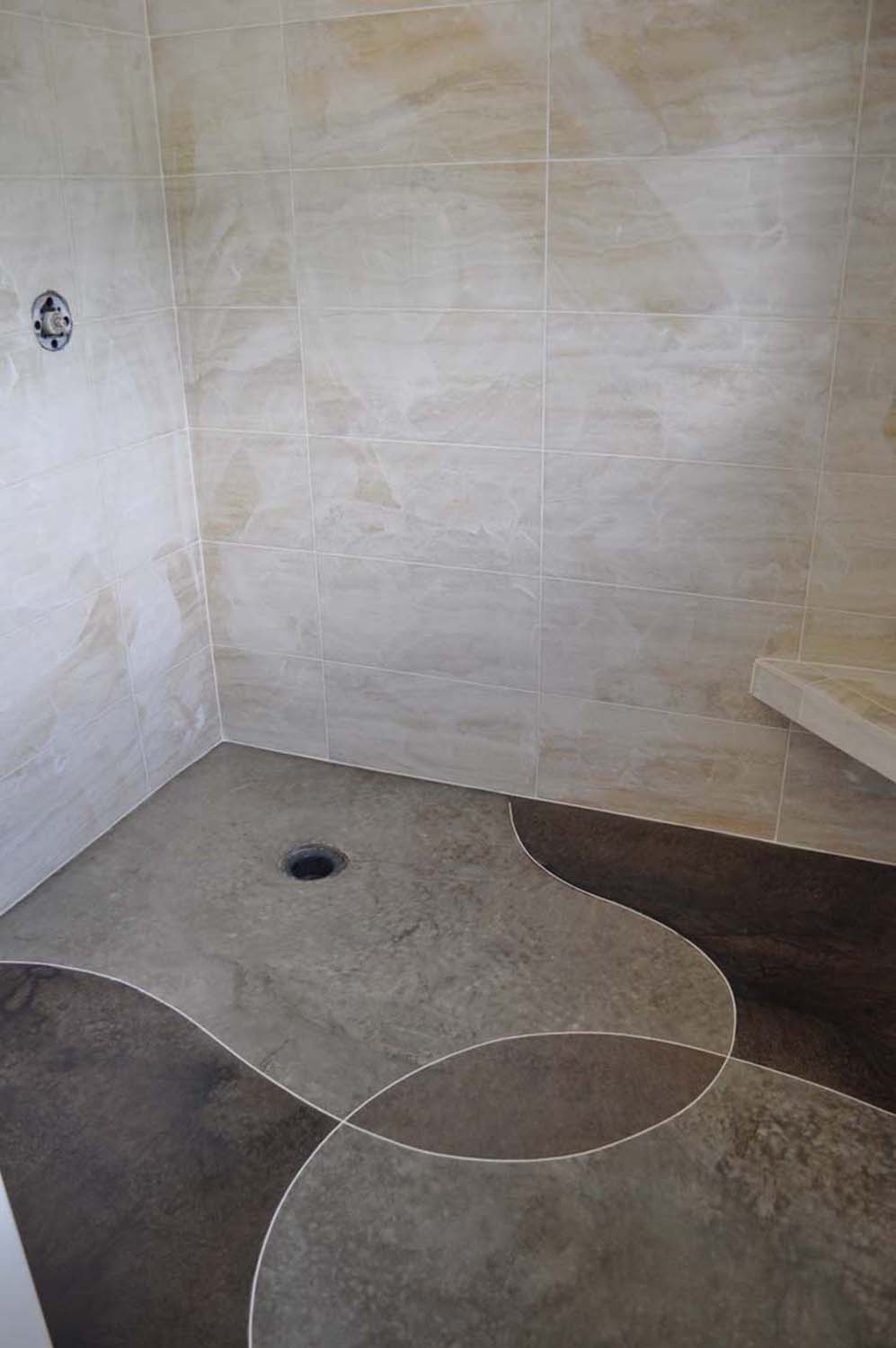 Stained and sealed concrete floors at baths and entries: provides water-proof surface, and utilizes structural slab as finished floor to reduce redundant flooring materials.
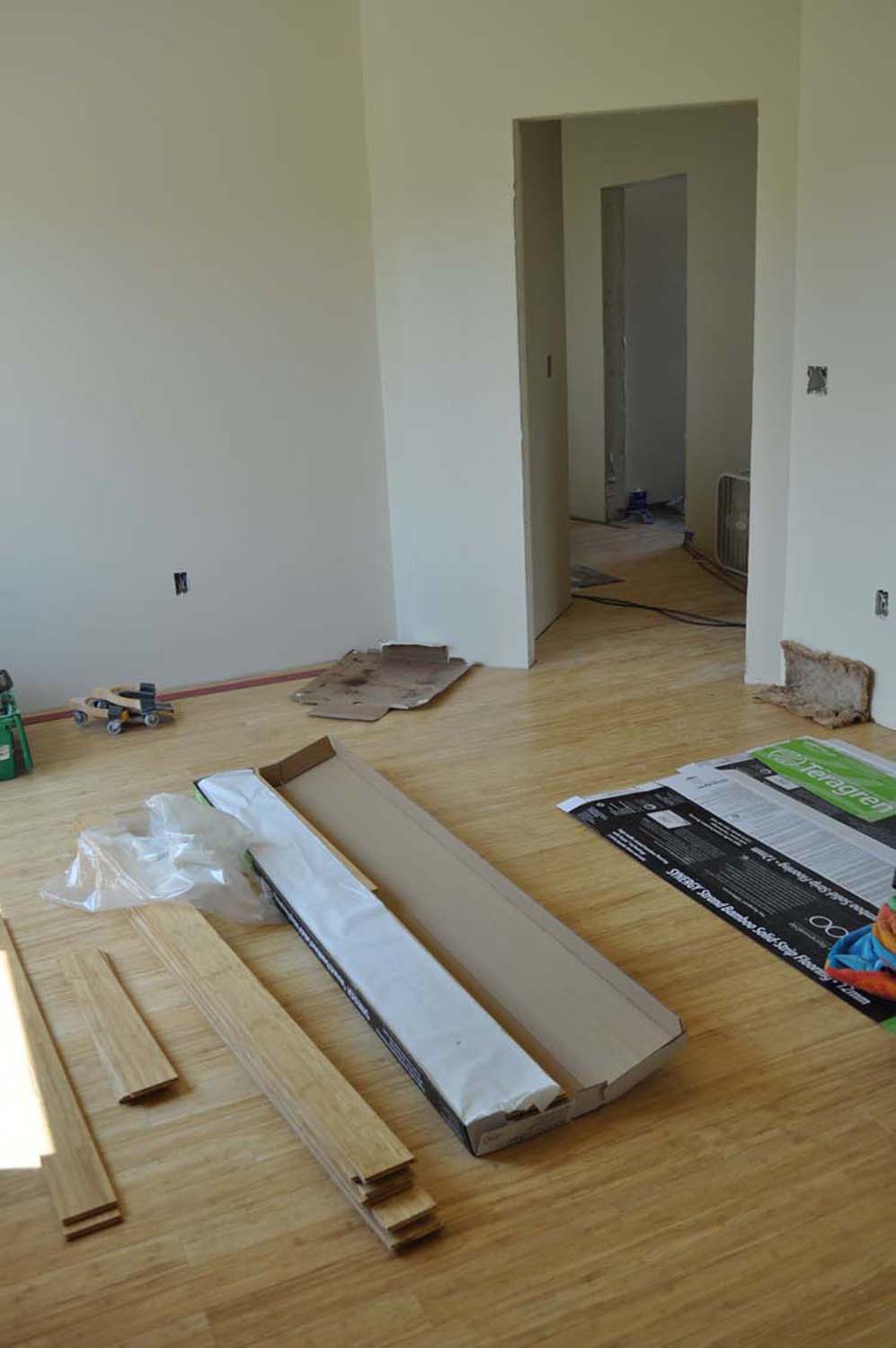 sustainably-harvested bamboo strand flooring in all other locations.
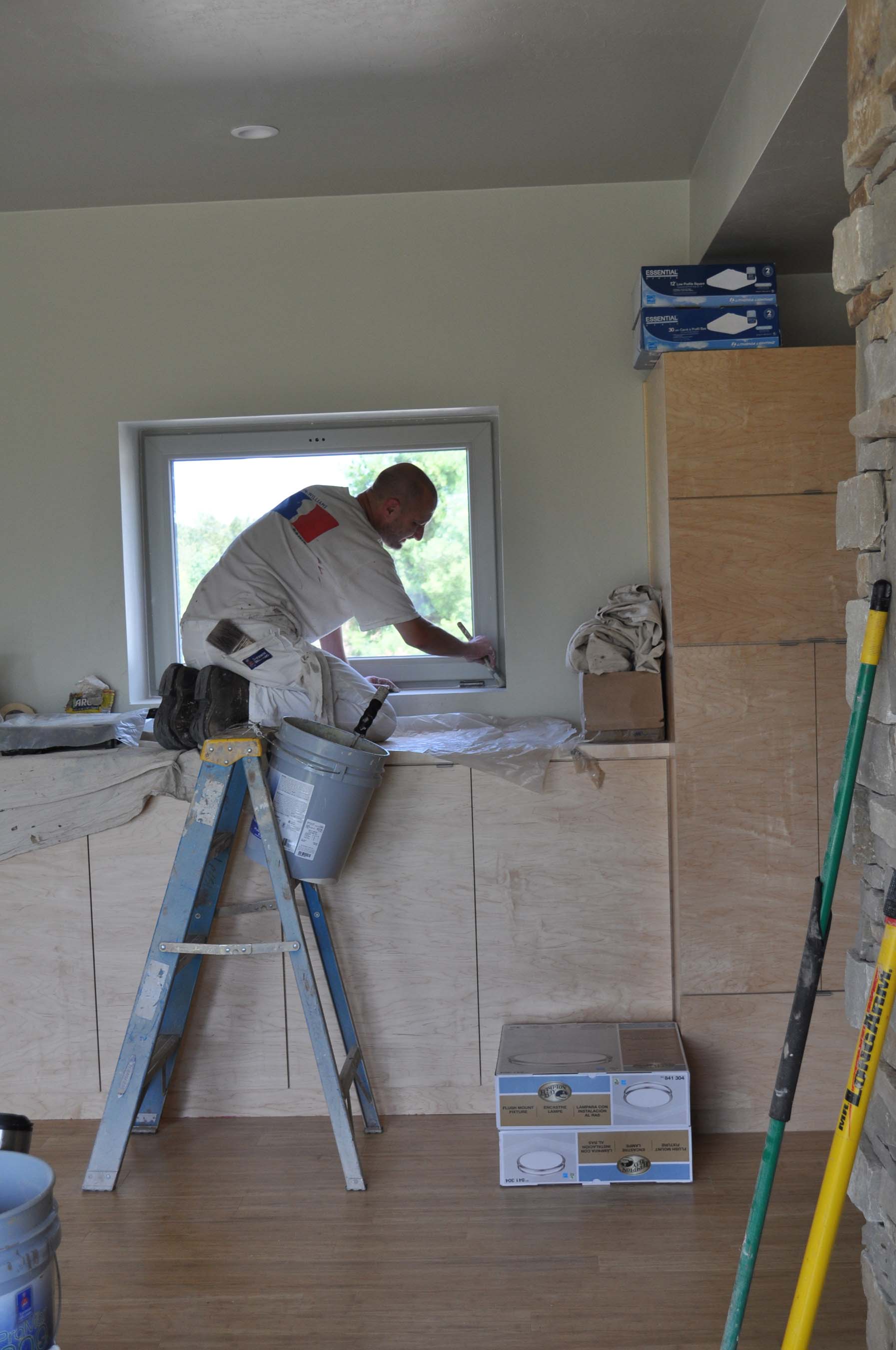 low-VOC paints used throughout; no window trim (to reduce use of hardwoods); maple veneer cabinets containing no formaldehyde, and built with low-VOC adhesives and finishes.
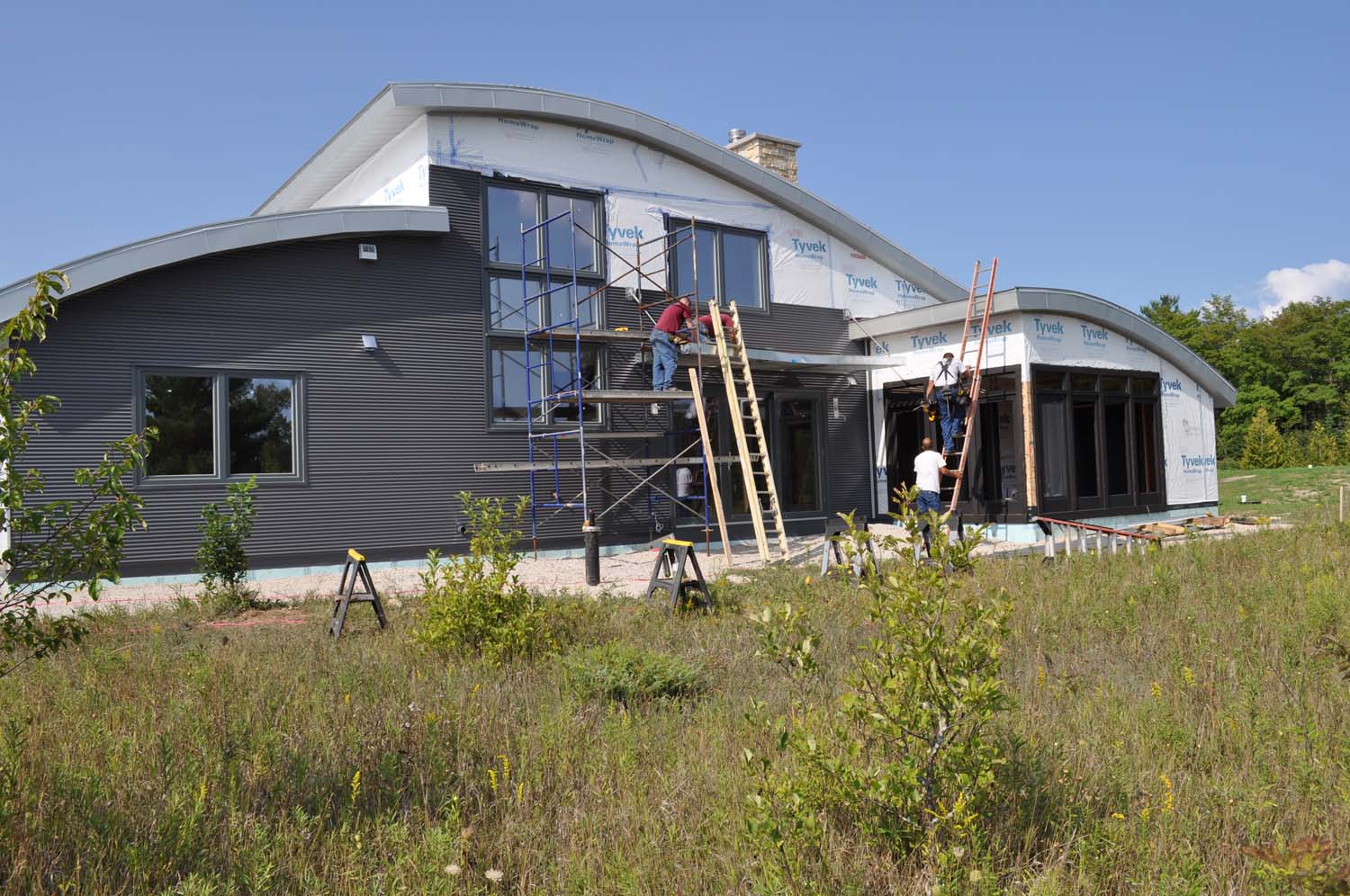 partially recycled steel siding & roofing
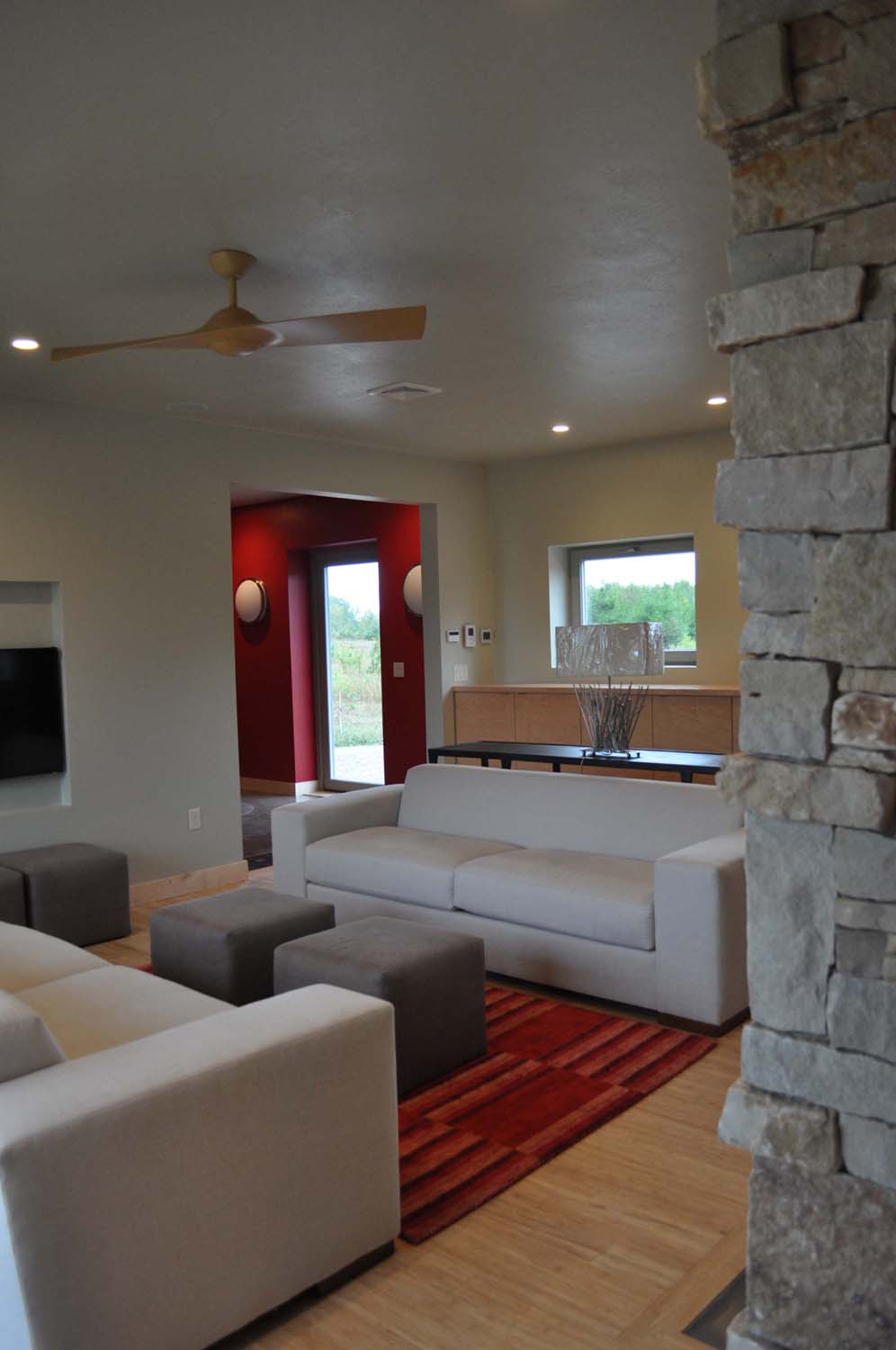 All LED or compact fluorescent lighting used throughout. All ceiling fans are Energy-Star rated.
Final blower door test conducted in December 2012, after installation of dining room window (which was damaged in shipment).
following is a synopsis of the project, by LEED for Home rate Tom Krawczyk:
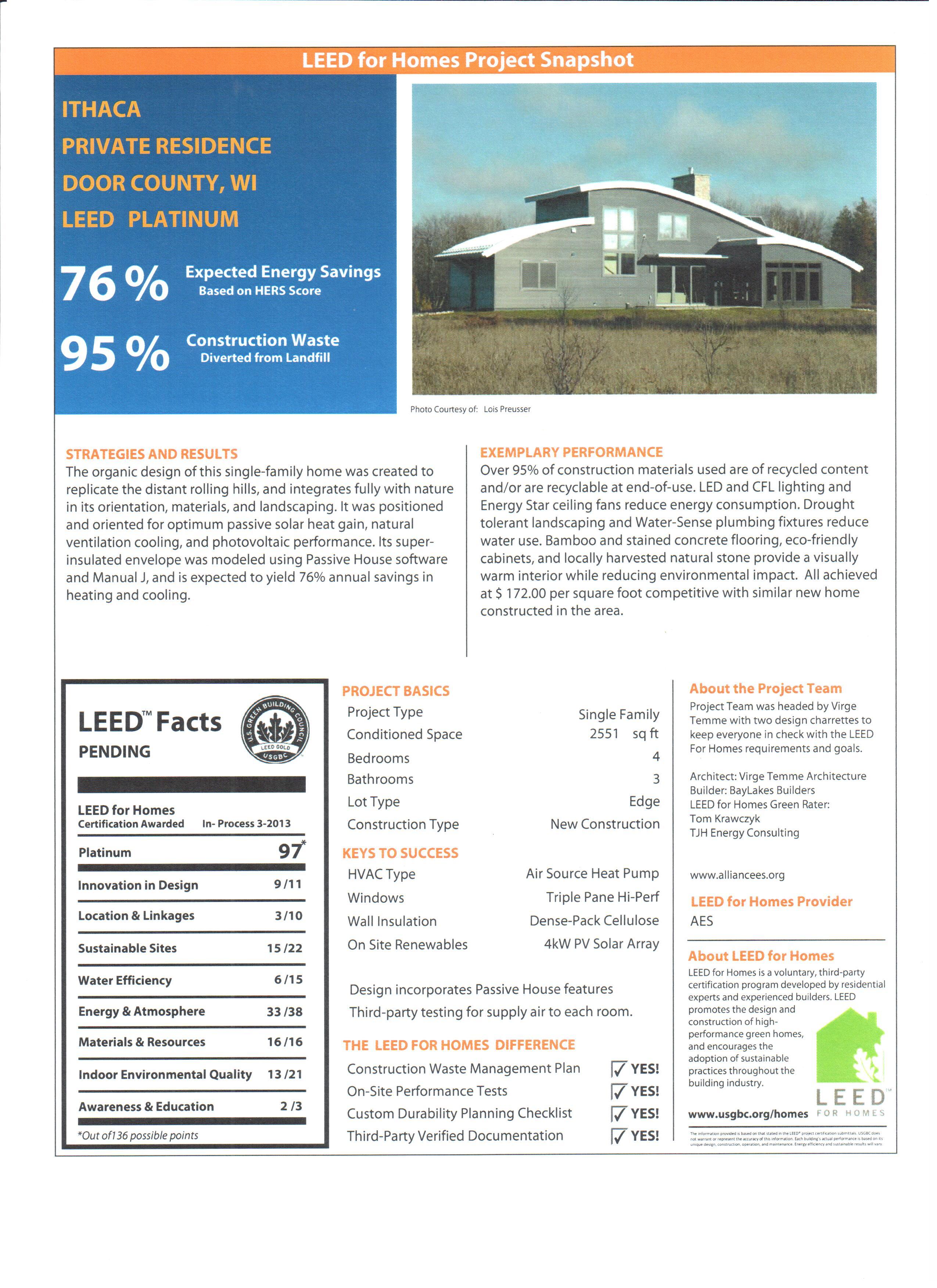
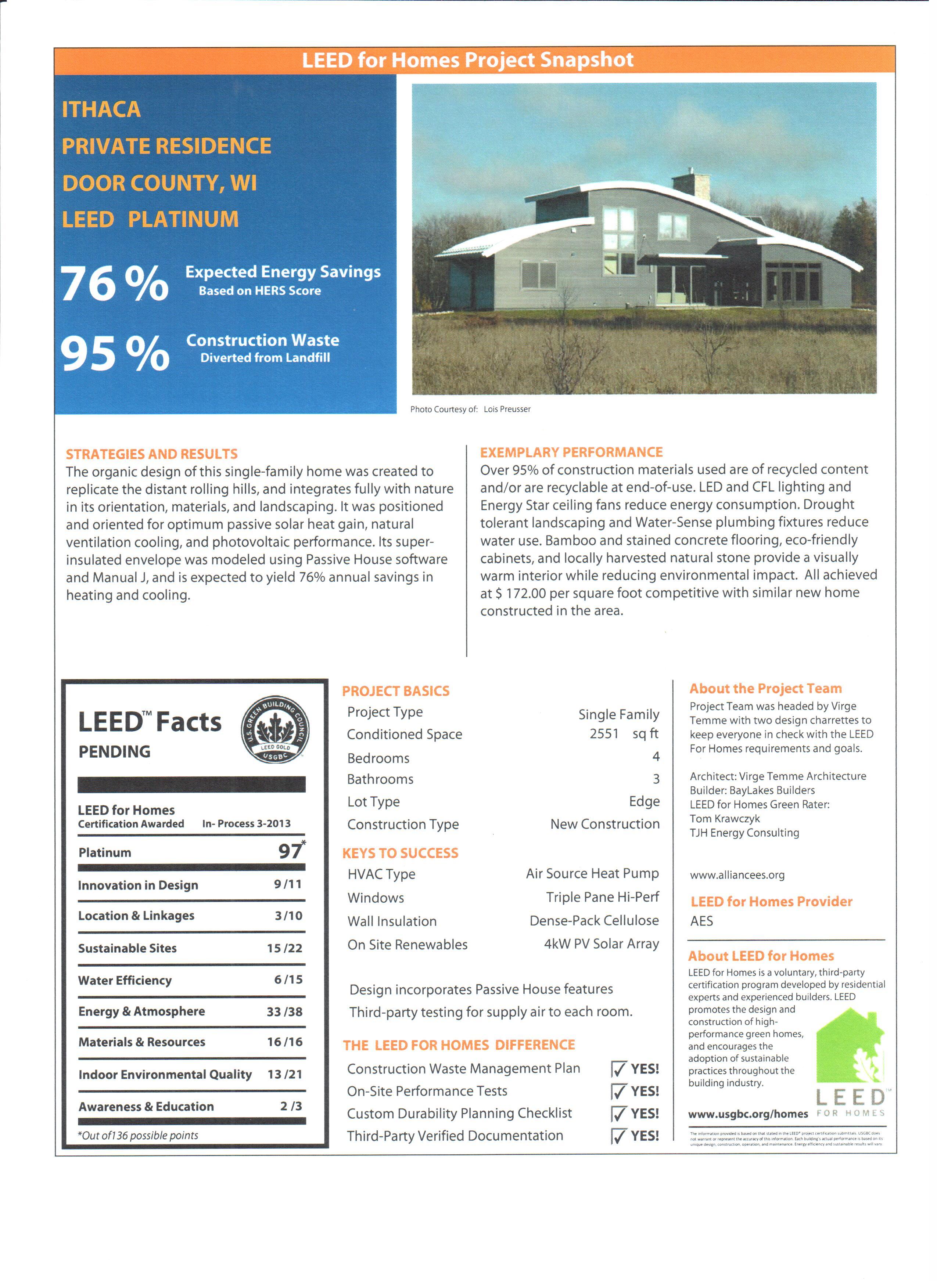
Results of LEED-for-Home review and final photos of project will be posted soon.